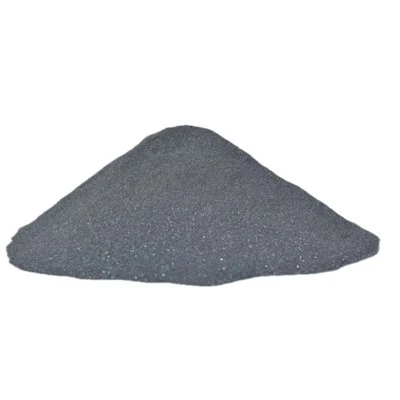
Silicon carbide (SiC) is a cost-effective metallurgical material widely used in steelmaking as a combined deoxidizer, silicon additive, and carbon source. It helps replace part of ferrosilicon and recarburizers, optimizing production costs while maintaining molten steel quality.

Silicon Carbide Grades & Chemical Composition
|
Grade |
SiC |
Free C |
Si+SiO₂ |
Fe₂O₃ |
|
SiC40 |
40.0-42.0% |
5.0±2.0% |
31.0±3.0% |
- |
|
SiC45 |
45.0±4.0% |
5.0±2.0% |
31.0±3.0% |
7.0±2.0% |
|
SiC55 |
55.0-57.0% |
4.8±1.5% |
28.0±3.0% |
5.0±2.0% |
|
SiC60 |
60.0-63.0% |
3.5±1.0% |
25.0±2.0% |
- |
|
SiC65 |
65.0-68.0% |
4.5±1.0% |
23.0±2.0% |
- |
|
SiC75 |
75.0±4.0% |
2.5±1.0% |
17.0±2.0% |
- |
Key Advantages
Lower Production Cost
SiC combines silicon and carbon functions, reducing the need for separate alloy additives.
Multi-Functional Performance
Provides deoxidation, carburization, and silicon alloying effects.
Suitable for Various Steel Grades
Applicable for plain carbon steel, low-alloy steel, and special steel production.
Flexible Grade Selection
Different SiC contents are available to match different metallurgical requirements.
Main Applications
Silicon carbide is commonly used in:
|
Application |
Function |
|
Carbon Steel Production |
Deoxidation and carbon adjustment |
|
Low-Alloy Steel |
Silicon and carbon addition |
|
Special Steel Production |
Molten steel quality improvement |
|
Foundry Industry |
Casting performance optimization |
|
Electric Furnace Steelmaking |
Cost-effective alloy additive |
Why Silicon Carbide Is Used in Steelmaking
Combined Silicon and Carbon Source
Unlike traditional single-element additives, SiC provides both silicon and carbon, helping simplify alloy adjustment during steel production.
Deoxidation Performance
Silicon in SiC reacts with oxygen-containing compounds in molten steel, helping reduce oxygen content and improve steel cleanliness.
Cost Optimization
SiC can partially replace ferrosilicon and recarburizers, reducing alloy addition costs while maintaining required steel performance.
Stable Metallurgical Treatment
Its controlled chemical composition supports consistent steelmaking processes.
Manufacturing & Supply Capability
Anyang Baitengxin Metals Co., Ltd. supplies silicon-based metallurgical materials and ferroalloy products for global steelmaking customers.
With professional production resources, quality control procedures, and export experience, the company provides customized SiC grades and specifications according to steel mill requirements.
Quality Control & Documentation
Quality control focuses on chemical composition stability.
Inspection includes:
SiC content analysis.
Free carbon testing.
Silicon-related composition testing.
Fe₂O₃ content inspection.
Batch quality verification.
Available documents:
Certificate of Analysis (COA).
Material Safety Data Sheet (MSDS).
Third-party inspection reports upon request.
Product Form & Supply Options
|
Item |
Specification |
|
Product Form |
Lump, granular, or customized forms |
|
SiC Content |
40%-75% grades available |
|
Chemical Adjustment |
Customized according to steelmaking requirements |
|
Particle Size |
Customized |
Packaging, Logistics & Storage
Supplied with customized export packaging according to order requirements.
Moisture-resistant packaging available.
Suitable for container shipment.
Store in a dry and ventilated warehouse.
Protect products from moisture and contamination.
Keep packaging sealed before use.
FAQ
| Grade | SiC | Free C | Si+SiO₂ | Fe₂O₃ |
| SiC40 | 40.0 - 42.0% | 5.0 ± 2.0% | 31.0 ± 3.0% | - |
| SiC45 | 45.0 ± 4.0% | 5.0 ± 2.0% | 31.0 ± 3.0% | 7.0 ± 2.0% |
| SiC55 | 55.0 - 57.0% | 4.8 ± 1.5% | 28.0 ± 3.0% | 5.0 ± 2.0% |
| SiC60 | 60.0 - 63.0% | 3.5 ± 1.0% | 25.0 ± 2.0% | - |
| SiC65 | 65.0 - 68.0% | 4.5 ± 1.0% | 23.0 ± 2.0% | - |
| SiC75 | 75.0 ± 4.0% | 2.5 ± 1.0% | 17.0 ± 2.0% | - |
Hot Tags: silicon carbide sic, China silicon carbide sic manufacturers, factory, black silicon carbide abrasive powder, black silicon carbide for foundry, metallurgical grade silicon carbide, metallurgical silicon carbide, silicon carbide 0 5mm for foundry, silicon carbide recarburizer powder